Research Projects
NeuroSpace: Gamified Virtual Reality Interfaces
for Motor Learning and Rehabilitation
Cerebral Palsy (CP) is the most common childhood physical
disability. Unilateral spastic CP accounts for 36.4% of these children
causing hemiparesis, where one side of the body is more affected and
functionally-impaired than the other. Current evidence-based practice
includes constraint-induced movement therapy (CIMT) as a
moderate-to-strong recommended intervention for children with CP. This
therapy, which constrains the less-affected limb to improve the use of
the hemiparetic arm, increases function through motor learning.
However, compliance with CIMT is significantly compromised due to
technical inconvenience and the intensity of the practice.Our project introduces a pioneering immersive CIMT-VR application. In this application, the user takes on the role of a virtual avatar in a manner that significantly enhances the motor improvement of the affected arm and restricts the less-affected arm without the need for external instruments. We utilize specific gamified reinforcement mechanics to facilitate alteration of the body schema. This contributes to the creation of an engaging and personalized VR intervention designed specifically for children with CP.
We are currently developing a brain-computer interface module that integrates with the gamified platform to facilitate the modification of spontaneous motor planning in case of hemiparesis. This system will be tested in a cohort of stroke survivors.
Partners: Dr. Alexis Mitelpunkt, Prof. Sigal Portnoy.
Theoretical preprint: Raz et al. PsyArXiv (2026)
The project is supported by the Association of Insurance Companies in Israel, Israeli Estates and Trusts Department, Ela Kodesz Institute for Technologies in Healthcare, Israel Science Foundation, and the Israeli Ministry of Innovation, Science and Technology.
Brain
Dragon: Gamified VR-Based Neurofeedback for Stress Resilience
Threat monitoring is essential for survival, yet individuals
differ markedly in how they regulate these responses. While some lean
toward avoidance, others tend to approach the threat; the ability to
transition between these states depends on neural plasticity, which is
often disrupted in conditions like anxiety or PTSD. Traditional
training often lacks the immersive provocation needed to build
real-world resilience, leaving a "prevention gap" in current
psychological interventions.Our project introduces a pioneering immersive neurofeedback (NF) paradigm that places users in a stressful VR provocation scenario featuring a threatening, fire-breathing dragon. Using EEG-based Electrical-FingerPrint (EFP) decoding, we provide real-time feedback from neural patterns associated with the amygdala and ventral striatum—regions involved in avoidance versus approach-oriented responses. The interface incorporates two gamified feedback modes representing distinct coping strategies: a defensive mode (a protective shield) and an approach-oriented mode (shooting an arrow). By utilizing these specific reinforcement mechanics, we aim to identify the neural signatures of adaptive threat regulation and develop personalized, targeted interventions to enhance functional stress resilience.
Partners: Prof. Talma Hendler (project leader), Dr. Reut Naim.
The
Neuroscience of Point-of-View Editing
and Cinematic Engagement
 Point-of-view editing, which makes a character's perceptual flow
visible, is a unique cinematic device. As point-of-view editing aligns
the spectator with a character's perception in a way that was not
possible before cinema, several film scholars have argued that this
technique boosts empathy and identification. Other researchers,
however, have cast doubt on this notion, pointing to the lack of
supporting evidence. This project employs a set of psychophysiological
tools, including fMRI and eye-tracking, to investigate the effect of
point-of-view editing on the spectator engagement with cinematic
characters. Our interdisciplinary team scripted, shot, and edited
short narrative movies that manipulate point-of-view editing and
integrate them into an experimental protocol that examines the
behavioral and neural effects of this special cinematic technique.
Point-of-view editing, which makes a character's perceptual flow
visible, is a unique cinematic device. As point-of-view editing aligns
the spectator with a character's perception in a way that was not
possible before cinema, several film scholars have argued that this
technique boosts empathy and identification. Other researchers,
however, have cast doubt on this notion, pointing to the lack of
supporting evidence. This project employs a set of psychophysiological
tools, including fMRI and eye-tracking, to investigate the effect of
point-of-view editing on the spectator engagement with cinematic
characters. Our interdisciplinary team scripted, shot, and edited
short narrative movies that manipulate point-of-view editing and
integrate them into an experimental protocol that examines the
behavioral and neural effects of this special cinematic technique.Partners: Prof. Dov Rubinstein, Prof. Liad Mudrik, Prof. Tim Smith, and Dr. Jonathan Frome.
Publication: Ovadia et al., Journal of Communication (2026)
The project was supported by Israel Science Foundation.
XTics
- A Gamified Tool for Intervention in Tic Disorders
 Tics are involuntary motor and/or vocal behaviors, which affect about
3% of the children. While they are rarely dangerous, tic disorders
commonly involve significant psychological distress for children who
manifest them as they cause social problems in family and school
environment. Existing behavioral treatments in tic disorders are
considerably successful, but their effectiveness is compromised by
limited access due to a shortage in expert clinicians. Moreover,
behavioral therapies in tic disorders are also limited by the reduced
compliance of young patients with the demanding training protocols.
Tics are involuntary motor and/or vocal behaviors, which affect about
3% of the children. While they are rarely dangerous, tic disorders
commonly involve significant psychological distress for children who
manifest them as they cause social problems in family and school
environment. Existing behavioral treatments in tic disorders are
considerably successful, but their effectiveness is compromised by
limited access due to a shortage in expert clinicians. Moreover,
behavioral therapies in tic disorders are also limited by the reduced
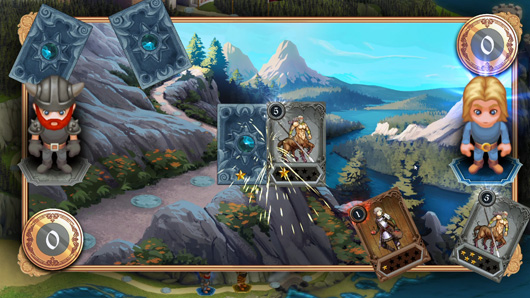
compliance of young patients with the demanding training protocols.We have developed a video game, informed by neuroscience, to serve as an intervention tool for tic disorders, where abnormalities in dopamine have been identified as a significant factor. In our initial study, we demonstrated that certain elements, which were integrated into the game to induce phasic dopaminergic responses, indeed escalate the frequency of tics. In a subsequent study, we developed a protocol for exposure and response prevention where the game triggers tics, and the users' progress is influenced by their ability to manage them. We discovered that this gamified protocol not only fosters significant engagement with the treatment but also demonstrates sustained clinical effectiveness.
Partners: Prof. Yael Leitner, Dr. Michael Rotstein, and Dr. Tamar Steinberg.
Publications:
Rotstein et al., Movement Disorders (2024)
Raz et al., European Journal of Neurology (2024)
The project was supported by the BrainBoost Innovation Center of the Sagol School of Neuroscience at Tel-Aviv University, and by the Tourette Association of America.
Augmented
Reality Storytelling in Parkinson's Disease Characterization
 Up to 60% of Parkinson's disease patients will experience Freezing of
Gait (FOG) during the disease. FOG is a sudden and brief episode of
inability to progress forward despite the willing to walk. It is a
major cause of falls in Parkinson's patients, injures and even death.
However, diagnostic methods today are general, and it is difficult to
understand the specific cause of FOG in each patient. In this project
we employ augmented reality technology and experiment with its unique
storytelling techniques. We aim to find the specific trigger for each
patient, including stress and cognitive load, in order to provide the
best treatment for each patient individually.
Up to 60% of Parkinson's disease patients will experience Freezing of
Gait (FOG) during the disease. FOG is a sudden and brief episode of
inability to progress forward despite the willing to walk. It is a
major cause of falls in Parkinson's patients, injures and even death.
However, diagnostic methods today are general, and it is difficult to
understand the specific cause of FOG in each patient. In this project
we employ augmented reality technology and experiment with its unique
storytelling techniques. We aim to find the specific trigger for each
patient, including stress and cognitive load, in order to provide the
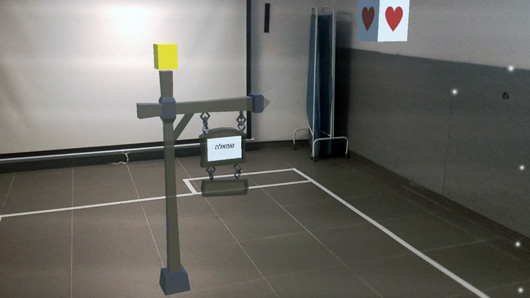
best treatment for each patient individually.Partner: Prof. Anat Mirelman.